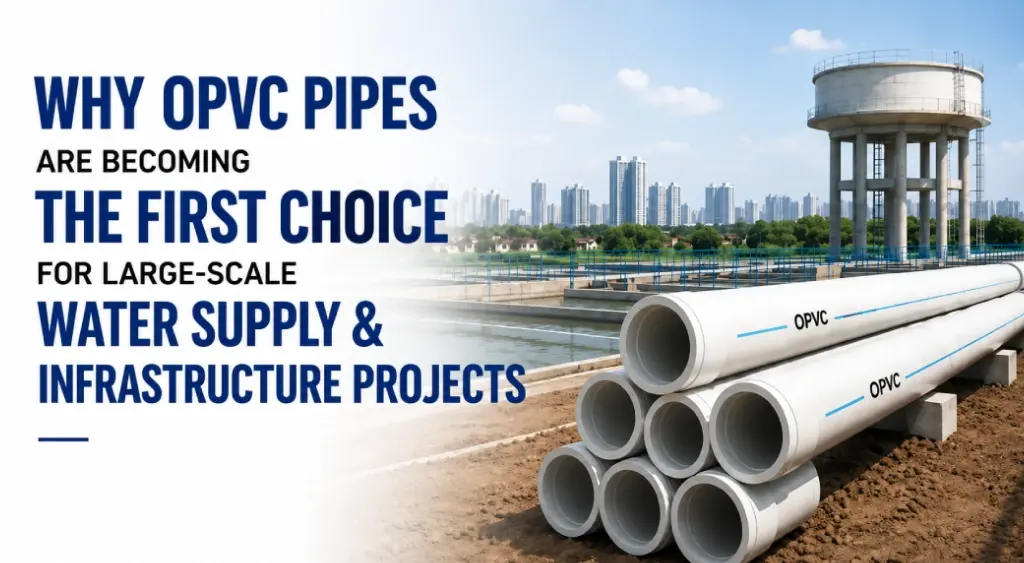


Large water supply projects require pipelines that are strong, durable, economical and easy to install. Oriented Polyvinyl Chloride, commonly known as OPVC, is increasingly becoming the preferred choice for such applications because it combines high performance with long-term cost efficiency.
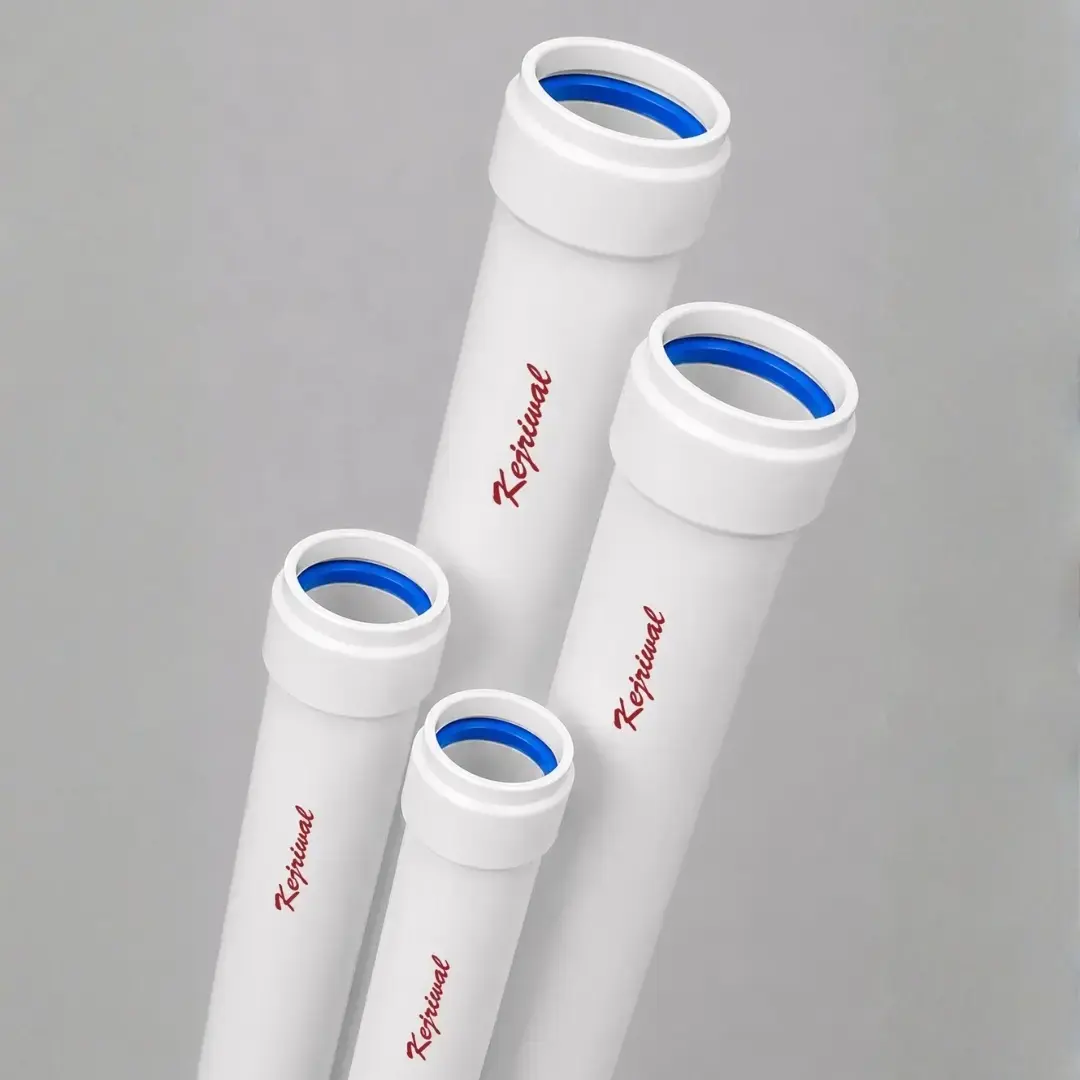
OPVC pipes are manufactured through a molecular orientation process that significantly improves the strength and toughness of conventional polyvinyl chloride. As a result, they can withstand high internal pressure, water hammer and external loads while remaining lightweight and flexible.
Their lower weight makes transportation, handling and installation easier, especially across long pipeline routes. Fewer heavy lifting machines and smaller installation teams may be required, helping projects save both time and labour costs. Their smooth internal surface also reduces frictional losses, allowing water to flow efficiently and potentially lowering pumping-energy requirements.
OPVC pipes are resistant to corrosion, chemical attack and scaling. Unlike metallic pipelines, they do not rust and generally require less maintenance throughout their service life. Their flexibility and impact resistance also make them suitable for difficult ground conditions and infrastructure projects where reliability is essential.
Another major advantage is sustainability. OPVC pipes use less raw material for comparable pressure performance and require less energy during transportation and installation.
With their strength, hydraulic efficiency, corrosion resistance, ease of installation and favourable life-cycle cost, OPVC pipes are emerging as a dependable solution for large-scale drinking-water, irrigation and urban infrastructure projects.