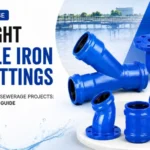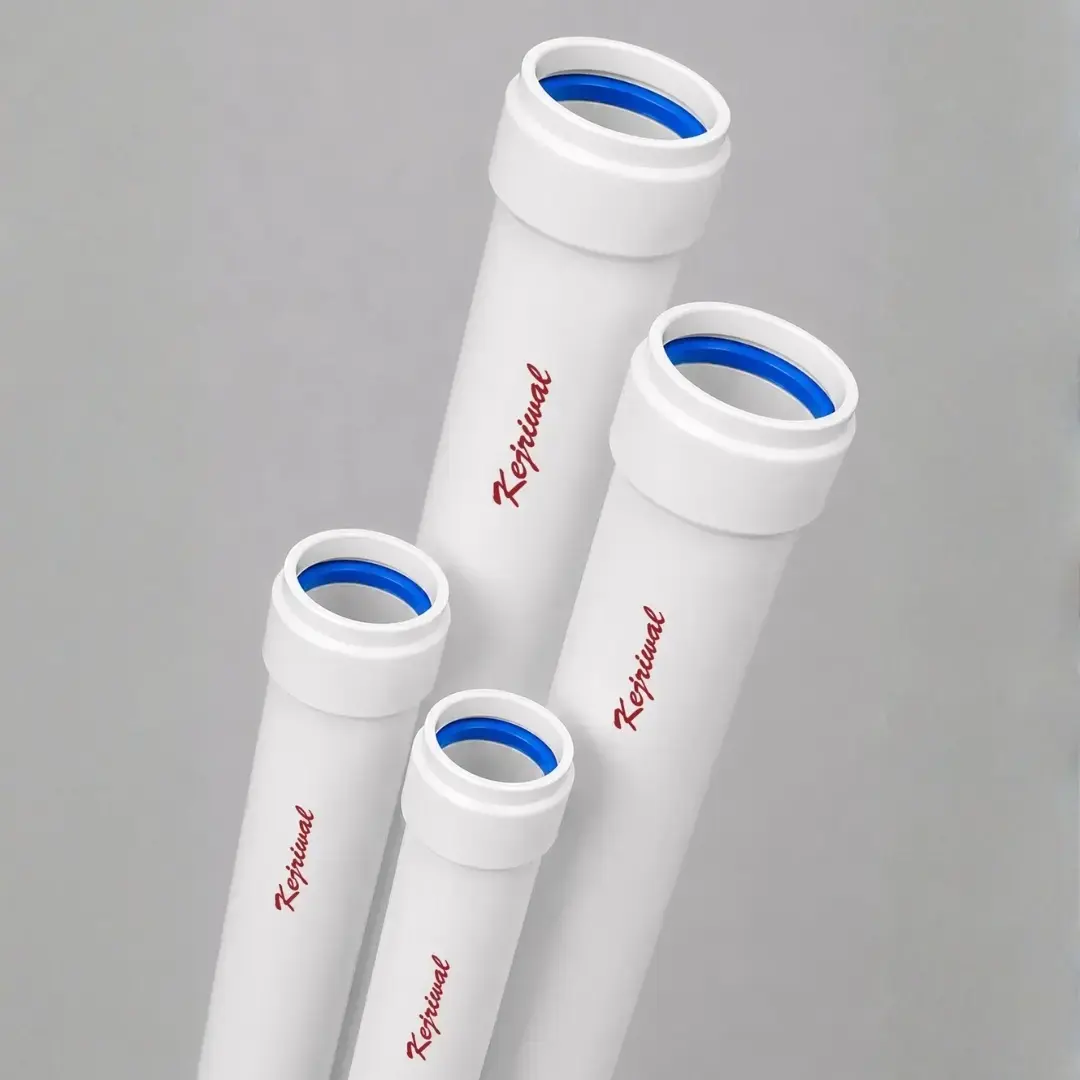
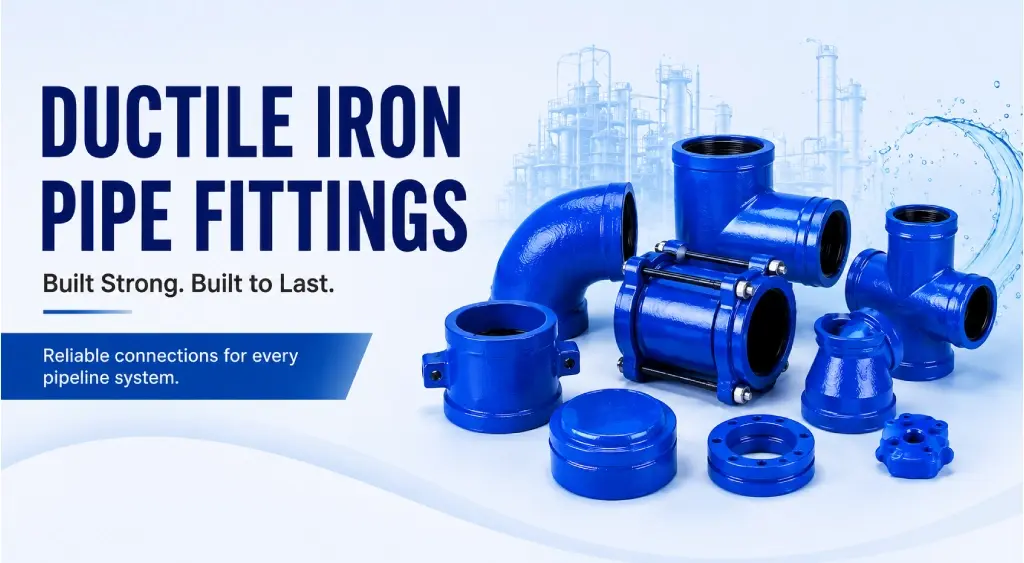


Oriented Polyvinyl Chloride pipes are increasingly used in pressurised water networks. Ductile iron fittings provide the specialised connections needed at bends, branches, valves and transitions.
Double-socket bend: Changes pipeline direction while maintaining a socketed connection.
Flanged bend: Connects the pipeline to flanged valves, pumps or equipment while changing direction.
Equal tee: Creates a branch of the same diameter as the main pipeline.
Reducing tee: Provides a smaller-diameter branch from the main line.
Cross fitting: Divides water flow into three separate branches.
Reducer: Connects OPVC pipes or components of different diameters.
Flanged socket: Connects an OPVC pipe end to flanged equipment.
Flange adaptor: Converts a plain OPVC pipe end into a flanged connection.
Universal coupling: Joins two plain-ended pipes and can accommodate minor dimensional variations.
Repair coupling: Reconnects a pipeline after a damaged section has been removed.
End cap or blank flange: Safely closes a temporary or permanent pipeline end.
Dismantling joint: Provides axial adjustment and simplifies valve installation or removal.
International guidance allows PVC-O pipeline systems to incorporate joints with suitable non-plastic components. However, compatibility should never be assumed. The fitting must match the pipe’s outside diameter, pressure class, gasket design and operating conditions. Where longitudinal forces may occur, suitable anchoring or restrained joints are also essential.