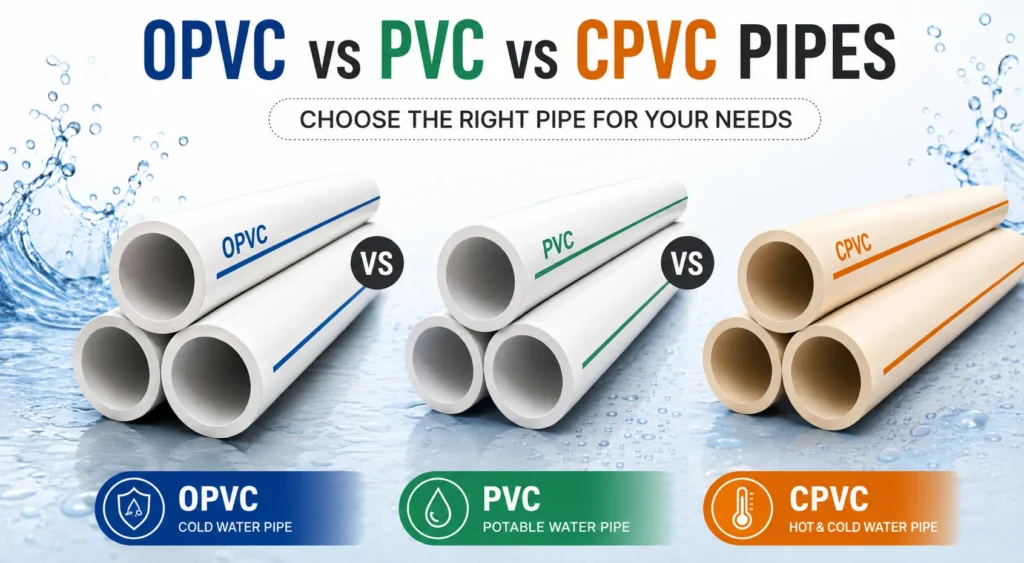


Polyvinyl chloride pipes are widely used in water supply, drainage, irrigation and industrial systems. However, OPVC, uPVC and CPVC pipes differ significantly in their manufacturing, strength and applications.
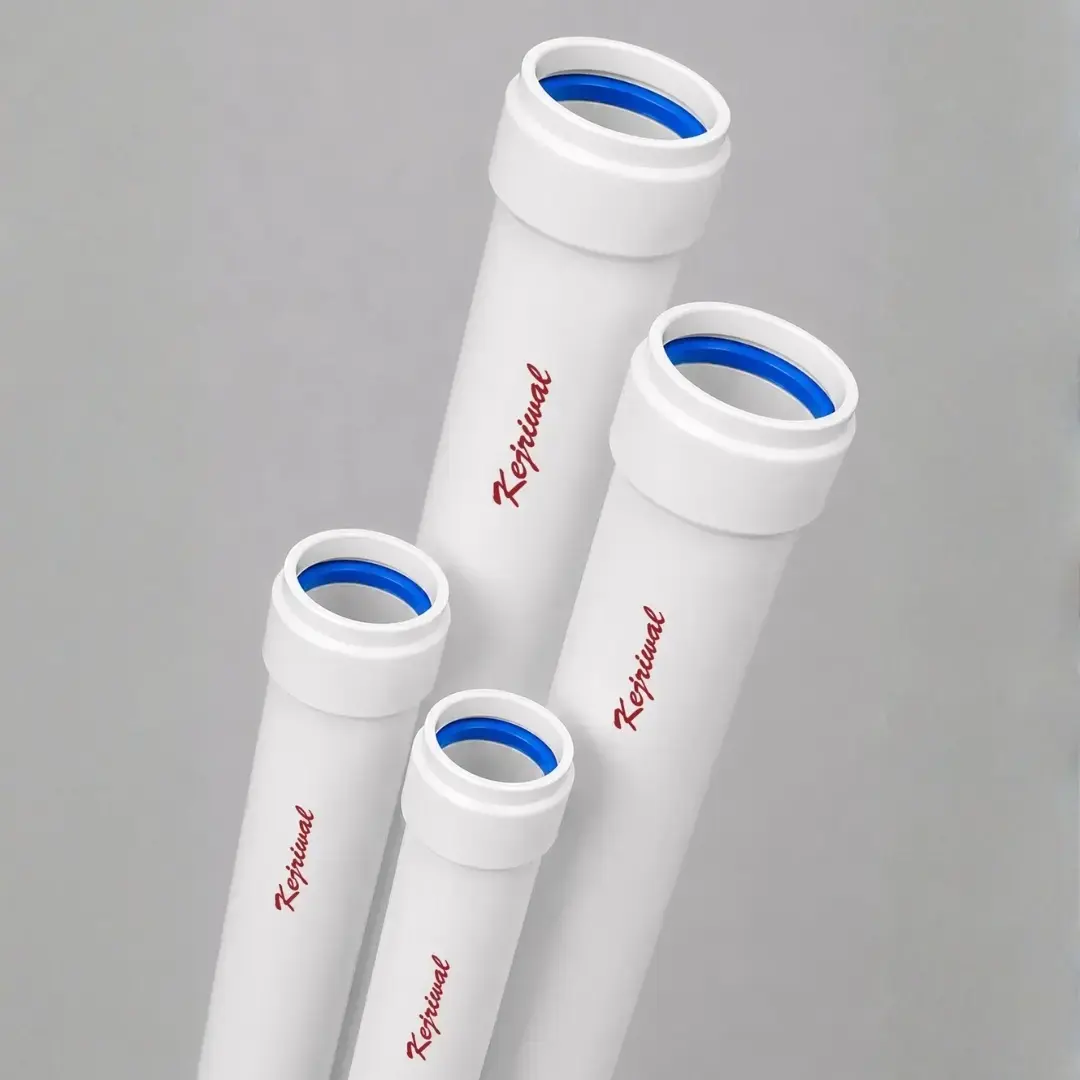
OPVC, or Oriented Polyvinyl Chloride, is produced by stretching conventional PVC under controlled conditions. This process aligns its molecules and greatly improves impact resistance, flexibility and pressure-bearing capacity. OPVC pipes are lightweight, require less material and are mainly used for pressurised drinking-water supply, irrigation and water transmission.
uPVC, or Unplasticised Polyvinyl Chloride, is rigid because it does not contain plasticisers. It offers good corrosion resistance, a smooth internal surface and economical installation. uPVC pipes are commonly used for cold-water supply, drainage, sewerage, borewells, electrical conduits and low-to-moderate pressure applications. However, they are not generally suitable for carrying hot water.
CPVC, or Chlorinated Polyvinyl Chloride, contains additional chlorine compared with ordinary PVC. This gives it higher temperature resistance and improved chemical resistance. CPVC pipes are therefore preferred for hot and cold-water plumbing, industrial process lines, fire-sprinkler systems and corrosive-fluid transportation.
In summary, OPVC is best suited for high-pressure water transportation, uPVC is an economical option for cold-water and drainage systems, and CPVC is the preferred choice for hot-water and chemically demanding applications. Selecting the correct pipe depends on pressure, temperature, fluid type, installation conditions and overall project cost.